
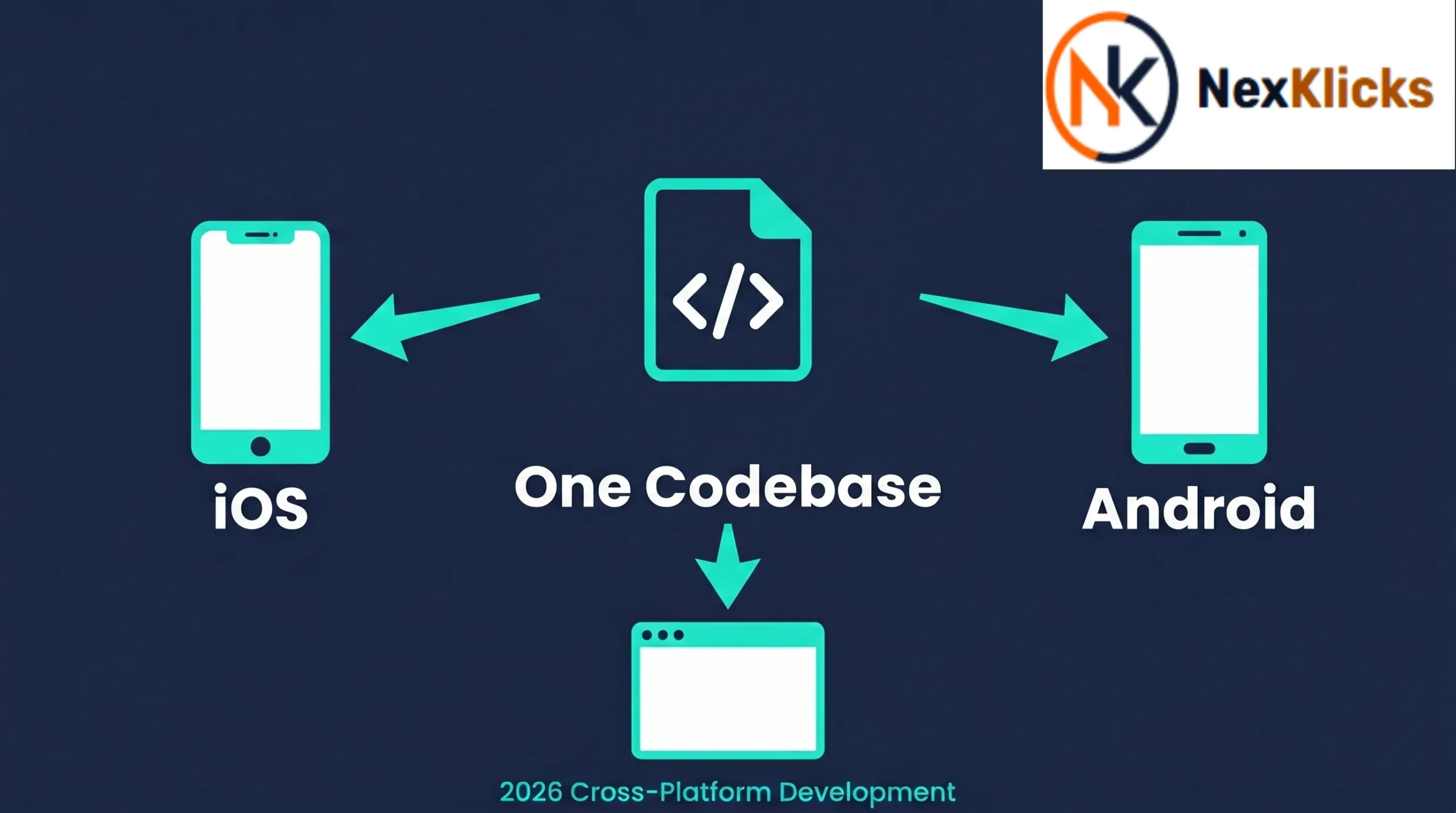
If you’ve been burned by agencies that promised one price and delivered another, or built you an iOS app and then quoted double for Android, you’re not alone. Cross-platform app development by Garage2Global solves exactly that problem. One codebase. Every platform. Significantly lower costs.
This guide is written specifically for US-based founders, CTOs, and product managers who already understand single codebase mobile app basics but need to know whether Garage2Global is the right partner before signing anything. You’ll find real numbers, honest comparisons, and the framework decision logic that most agencies never bother to explain.
What Is Cross-Platform App Development by Garage2Global?
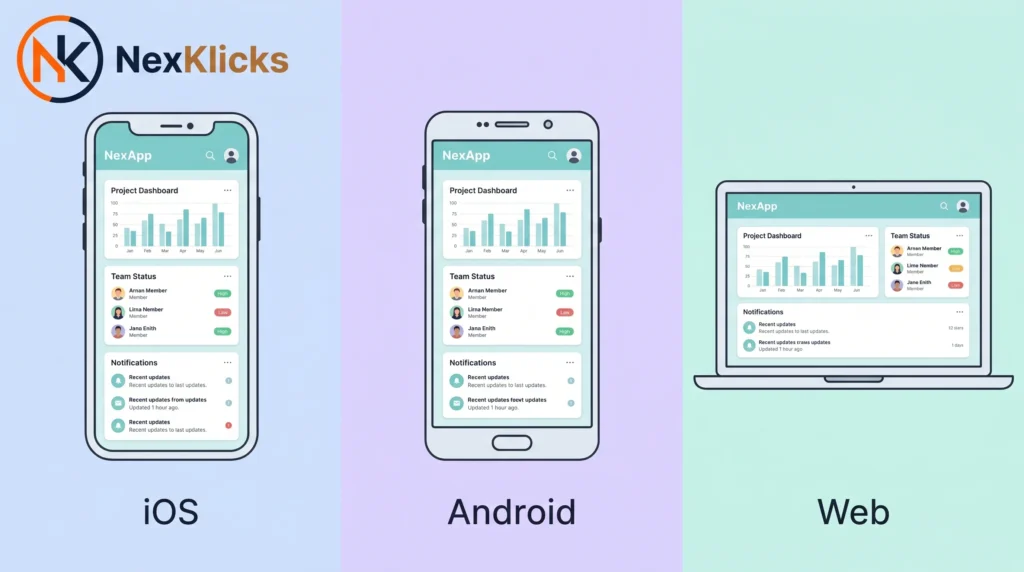
Cross-platform app development by Garage2Global refers to building a single application that runs natively on iOS, Android, and the web from one shared codebase. This approach eliminates the need to build and maintain separate apps for each platform, reducing both cost and time to market significantly.
Garage2Global app development takes the write-once-deploy-everywhere philosophy seriously. But it goes further than most agencies by combining near-native performance with enterprise-grade architecture, so you’re not trading quality for convenience.
How It Differs from Native and Hybrid App Development
Native development means building a separate app for each platform using Swift for iOS and Kotlin for Android. It delivers the best performance but doubles your budget and your maintenance burden. Hybrid vs cross-platform apps is a different comparison entirely. Hybrid apps wrap a website inside a native shell, which often feels sluggish and limited. Cross-platform frameworks like Flutter and React Native compile to actual native code, which is why near-native app performance is achievable without the double cost.
Why Single Codebase Development Is the 2026 Standard
According to Statista (2024), Flutter was used by 46% of cross-platform development frameworks developers globally, making it the most popular framework two years running. The industry has clearly moved past the “native is always better” debate. For most business use cases in 2026, write once deploy everywhere delivers results that users can’t distinguish from fully native builds.
Cross-platform app development is the practice of writing one shared codebase that deploys across iOS, Android, and web platforms. According to Statista (2024), Flutter leads this space with 46% developer adoption. For startups and enterprises in the US, this approach typically reduces development costs by 40 to 50 percent compared to building separate native apps for each platform.
Why Businesses Trust Garage2Global for Cross-Platform App Development
Trust in a dev agency comes down to three things: credentials, communication, and track record. Garage2Global checks all three in ways that most competitors don’t.
ISO Certifications, HIPAA/GDPR Compliance, and What They Mean for You
If you’re building in healthcare or fintech, compliance isn’t optional. A HIPAA compliant mobile app requires specific data handling architecture, audit logging, and security standards baked in from day one, not bolted on after launch. Garage2Global holds ISO certifications and builds to both HIPAA and GDPR standards as the default, not as an add-on service. That matters enormously if you’re operating in regulated industries or handling sensitive user data.
Client Communication Model: Jira, Slack, and Weekly Demo Calls Explained
Most agencies send a monthly report and call it communication. Garage2Global runs weekly demo calls, maintains live project boards in Jira, and keeps a dedicated Slack channel open throughout the agile sprint development cycle. You see, working builds every sprint. You give feedback in real time. There are no surprise reveals after three months of silence.
According to industry benchmarks, poor communication is the leading cause of failed software projects. Garage2Global addresses this with weekly demo calls, Jira project tracking, and Slack access throughout development. This mobile app development agency USA model gives decision-makers direct visibility into progress without needing to chase updates, which is a structural advantage over agencies that only report monthly.
How to Choose Between Flutter, React Native, and .NET MAUI for Your Project
This is the section every competitor skips. They list the frameworks. They don’t tell you which one is right for your specific situation. Here’s the honest breakdown.
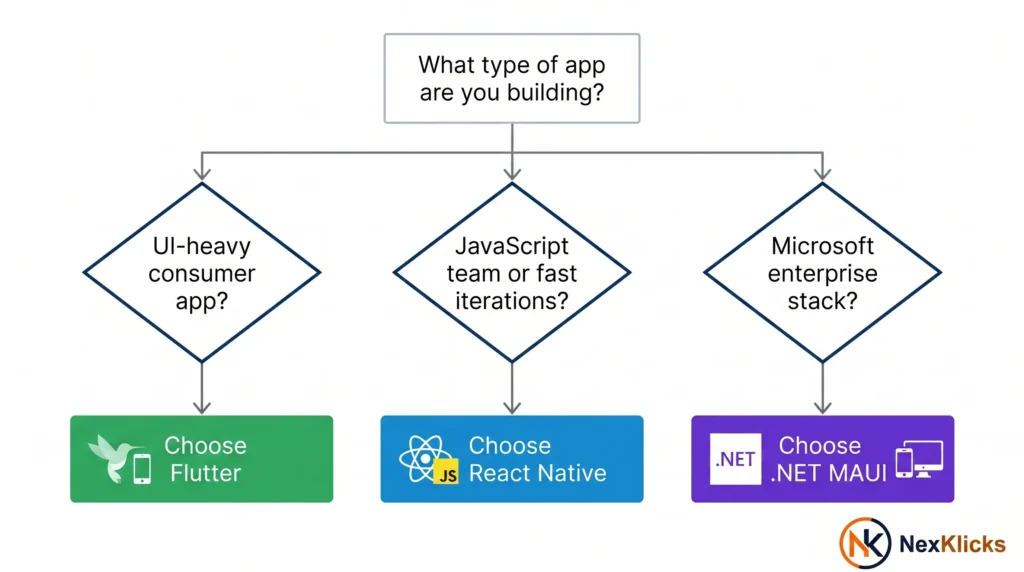
Flutter: Best for UI-Heavy Consumer Apps
Flutter, built by Google, compiles to native ARM code and uses its own rendering engine called Skia. This gives it pixel-perfect control over every visual element on every platform. If your app’s success depends on a polished, distinctive UI, such as a consumer product, a marketplace, or a lifestyle app, Flutter app development company expertise is what you need. Garage2Global uses Flutter as its primary framework for exactly these projects.
React Native: Best for JavaScript Teams and Fast Iterations
React Native, maintained by Meta, uses JavaScript to bridge native components. If your team already has JavaScript developers or your product roadmap demands frequent feature releases, React Native development services offer a major advantage. The ecosystem is vast, the talent pool is large, and iteration cycles are fast. It’s the right pick when integration complexity and developer familiarity matter more than visual uniqueness.
.NET MAUI: Best for Microsoft-Ecosystem Enterprises
If your business already runs on Azure, uses Active Directory, or has internal tools built on the Microsoft stack, .NET MAUI is the logical choice. It integrates cleanly with existing infrastructure and makes enterprise mobile app development straightforward for IT teams that are already Microsoft-familiar.
Decision Matrix: Which Framework Fits Your Budget and Timeline?
Quick Comparison
| Option | Best For | Key Benefit | Limitation |
|---|---|---|---|
| Flutter | UI-heavy consumer apps | Pixel-perfect UI, fast performance | Smaller talent pool than React Native |
| React Native | JS teams, high iteration speed | Large ecosystem, rapid releases | UI customization can require extra work |
| .NET MAUI | Microsoft-stack enterprises | Deep Azure and AD integration | Less suited for consumer-facing apps |
Flutter vs React Native: Flutter is better suited for visually complex consumer apps because it uses its own rendering engine for pixel-perfect consistency. React Native works better when your team already uses JavaScript and release speed is the priority. The key difference is rendering approach, Flutter draws its own UI, React Native maps to native components.
Cross-platform framework selection doesn’t need to be guesswork. Garage2Global walks every client through this decision in the first discovery workshop, so you’re never locked into a framework that doesn’t fit your goals.
Key Benefits of Cross-Platform App Development by Garage2Global
Cost Breakdown: How Businesses Save 40-50% vs Native Development
Here’s what that saving actually looks like in practice. A native dual-platform build means two separate codebases, two sets of developers, two QA cycles, and two deployment pipelines. Mobile app development cost savings compound across the entire project lifecycle. With iOS and Android app development from a single codebase, you pay for one development team, one testing cycle, and one codebase to maintain going forward. App development cost breakdown typically shows the biggest savings in QA and ongoing maintenance, not just initial build cost.
Time-to-Market Advantage in Competitive US App Markets
App development for startups is often a race. Garage2Global’s single codebase approach means the Garage2Global team builds features once, and they appear everywhere simultaneously. MVP launch timeline for most projects sits between 8 and 16 weeks, with simple MVPs launching in as few as 6 weeks.
The time-to-market advantage of cross-platform development is significant for US startups. According to case data from Garage2Global, clients using Flutter-based single codebase development launched their MVPs 45 percent faster than comparable native builds. For early-stage companies where speed to revenue matters, this difference can determine whether a product succeeds or gets outpaced by competitors.
Launching faster also means your content marketing engine needs to be ready in parallel. If you’re building out your digital presence alongside your app, these content writing tips are specifically useful for tech and SaaS businesses preparing for a product launch.
7-Step Process for Cross-Platform App Development by Garage2Global
To launch a cross-platform app with Garage2Global, follow these steps:
- Complete the discovery workshop to define goals and feature scope.
- Review and approve UX/UI prototypes before development begins.
- Select the right framework based on your use case and team context.
- Review working builds at the end of every agile sprint.
- Test across real devices using automated and manual QA.
- Submit to App Store and Google Play with Garage2Global handling deployment.
- Monitor performance and release updates through the post-launch support plan.
Discovery and Strategy Workshop: What to Expect in Week One
Week one isn’t about code. It’s about alignment. Garage2Global runs structured discovery workshops to map your business goals, target users, and success metrics to a prioritized feature list and realistic timeline. You walk away with a project roadmap you’ve actually seen and agreed to, not one that exists only in a project manager’s head.
Agile Sprint Structure: How You Stay in Control Every Step
Every sprint delivers a working, testable build. The agile mobile app development process Garage2Global follows means you never wait months to see what you’re paying for. Feedback loops are tight. Scope changes are managed transparently. And because the mobile app UI/UX design phase happens before any code is written, expensive design pivots mid-build are rare.
Real Results from Cross-Platform App Development by Garage2Global
SaaS Startup MVP Launched in 10 Weeks with 4.7-Star Rating
A B2B productivity startup needed to launch on both mobile platforms simultaneously. Using mobile app MVP development with Flutter, Garage2Global delivered the MVP in 10 weeks. Results included 45 percent faster time-to-market, 35 percent lower development costs compared to the native quote they had received, and a 4.7-star App Store rating within the first quarter.
E-Commerce Brand Boosts Mobile Conversions by 32%
An online retailer was losing customers at checkout on mobile. Garage2Global rebuilt the app using React Native. Mobile conversions increased 32 percent, page load times dropped 40 percent, and repeat purchases grew 25 percent within six months. The mobile app ROI measurement was straightforward because the metrics were defined upfront during discovery.
Enterprise Logistics Firm Cuts Maintenance Costs by 48%
A large logistics company needed secure, scalable field team apps. Moving to .NET MAUI through Garage2Global’s process reduced mobile app maintenance costs by 48 percent, and internal adoption increased 55 percent. New features now deploy in days instead of the months it previously took to coordinate separate iOS and Android releases.
These results don’t happen by accident. If you want to understand the broader growth strategy behind how Garage2Global helps businesses scale your business online with Garage2Global, that breakdown covers the full picture beyond app development alone.
Technology Stack That Powers Cross-Platform App Development by Garage2Global
Backend Infrastructure: Node.js, Firebase, and AWS Integration
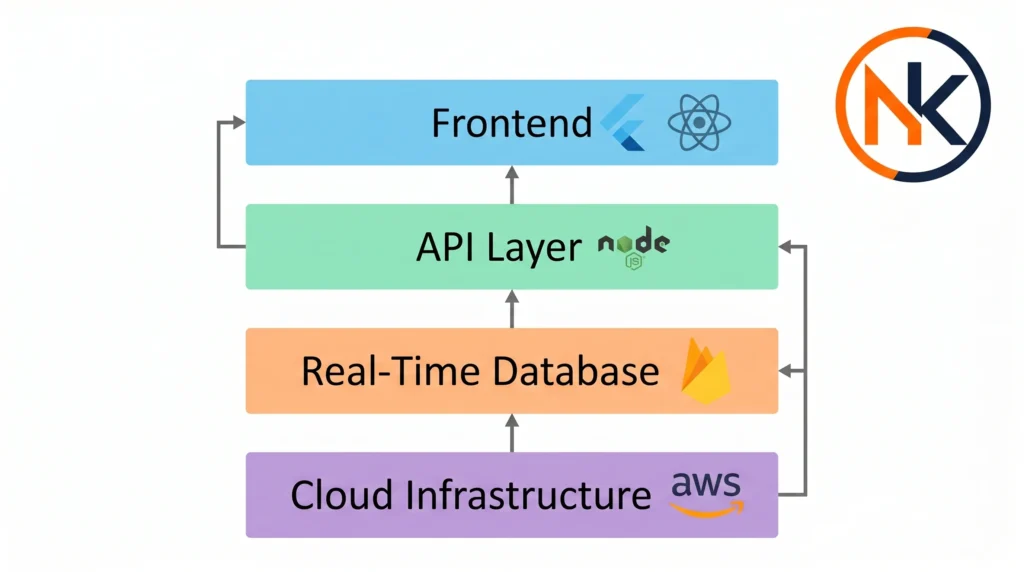
A great front end needs a solid back end. Mobile app backend integration at Garage2Global runs on Node.js for flexible API development, Firebase for real-time data and authentication, and AWS for scalable cloud-native mobile backend infrastructure. This is an API-first development approach, which means third-party integrations are clean and maintainable rather than fragile workarounds.
CI/CD Pipelines and Automated Testing Tools Used in Every Build
CI/CD pipeline mobile apps are not optional at Garage2Global; they’re standard. Every build runs through automated pipelines that catch regressions before they reach you. The cross-platform testing strategy combines automated device farm testing with manual QA on real hardware, covering edge cases that simulators miss.
Before your app goes live, make sure the web layer is equally optimized. This mobile SEO checklist covers the technical requirements your app’s web presence needs to rank and perform well alongside your native deployments.
Post-Launch Maintenance Cost: Cross-Platform vs Native (Real Numbers)
This is the conversation most agencies avoid because it requires honesty about long-term costs, which aren’t always in their interest to discuss.
Why Single Codebase Reduces Long-Term Bug Fix and Update Costs
With native apps, a bug fix must be written, tested, and deployed twice, once for iOS and once for Android. A feature update multiplies every hour of development by two. Mobile app maintenance costs for native dual-platform apps typically run 60 to 80 percent higher annually than equivalent cross-platform builds. The app scalability architecture of a well-built cross-platform app also means adding new features doesn’t require architectural rewrites.
What Ongoing Support Looks Like After Your App Goes Live
Post-launch app support from Garage2Global includes performance monitoring, bug fixes, OS update compatibility, and feature releases. Many clients stay on retainer for years because the support is proactive, not reactive. You hear about a potential issue before your users do.
Industries Benefiting from Cross-Platform App Development by Garage2Global
Healthcare, Fintech, Retail, Education, Logistics, and Entertainment Use Cases
Healthcare organizations deploy patient monitoring apps that work across every device a clinician might carry. Fintech companies build App Store and Google Play submission-ready apps with secure transaction flows that meet compliance standards out of the box. Retailers unify inventory management and customer-facing shopping into one maintainable codebase. Education platforms deliver interactive content that works equally well on a student’s phone or tablet. Logistics firms give field teams consistent tools regardless of the Android device brand they’re using. Entertainment products stream content across platforms without separate native builds for each.
Garage2Global has delivered across all six of these verticals, which means domain-specific patterns and compliance considerations are already part of the team’s working knowledge.
Overcoming 10 Biggest Challenges in Cross-Platform App Development
Performance Optimization, Native Feature Access, and Device Fragmentation Solutions
Near-native performance optimization is achieved through hardware acceleration, optimized rendering pipelines, and selective use of native modules where platform-specific performance is critical. Camera access, GPS, biometric authentication, and push notifications all require native API bridges, and Garage2Global builds these using well-maintained plugin ecosystems rather than custom workarounds that become liabilities later.
Cross-platform UI consistency across hundreds of Android device sizes and OS versions is managed through a design system that adapts to platform guidelines automatically. App Store approval delays are avoided by following Apple and Google submission requirements from the first build, not as an afterthought before launch.
Garage2Global vs Other Agencies: Side-by-Side Comparison
Why Experience, Transparency, and Post-Launch Support Are the Real Differentiators
| Feature | Garage2Global | Typical Competitor |
|---|---|---|
| Years of Specialized Experience | 10+ | 3 to 5 |
| Apps Delivered | 500+ | Under 100 |
| Framework Expertise | Flutter, React Native, .NET MAUI | Usually one framework |
| Pricing Transparency | Full breakdown upfront | Often vague until contract |
| Post-Launch Support | Included in all plans | Usually an extra cost |
| Client Communication | Weekly demos plus Jira and Slack | Monthly reports |
| Compliance Standards | HIPAA, GDPR, ISO certified | Variable |
The digital product development partner you choose affects not just the launch but every update, fix, and feature for years afterward. Garage2Global’s post-launch support inclusion is a structural difference, not a marketing claim.
Transparent Pricing: What Does Cross-Platform App Development by Garage2Global Actually Cost?
MVP vs Full-Scale Enterprise App Pricing Tiers
Cross-platform mobile app development cost 2026 at Garage2Global ranges from $12,000 for basic MVPs to $120,000 and above for complex enterprise solutions. A typical mid-market app with core features, backend integration, and two-platform deployment sits between $25,000 and $60,000. These are not ballpark figures. They are starting points based on a defined scope.
How to Get an Accurate Quote Without Hidden Fees
The single codebase app development company pricing model Garage2Global uses is scope-first. You submit your requirements, receive a detailed breakdown by feature and phase, and sign off on the full cost before a line of code is written. There are no change orders for features that were always part of the original discussion.
Compared to verified Clutch.co app development benchmarks, Garage2Global’s pricing aligns with top-tier US agency averages while offering significantly more upfront scope clarity than most competitors.
Future of Cross-Platform App Development by Garage2Global in 2026 and Beyond
AI Personalization, Super Apps, and Offline-First Architecture Trends
Cross-platform mobile strategy in 2026 is converging around three major trends. AI-powered personalization, where apps adapt content and workflows dynamically to individual user behavior, is becoming a competitive baseline rather than a differentiator. Super apps that consolidate multiple services into one experience are gaining traction in US markets after dominating in Asia. Mobile app scalability planning now starts with offline-first architecture because users expect apps to function in low-connectivity environments, not just crash gracefully.
Garage2Global mobile app services roadmap already includes these capabilities. When you build with them today, you’re not building for 2026 only. You’re building a foundation that supports the next five years of mobile product evolution without needing a rewrite.
FAQs About Cross-Platform App Development by Garage2Global
Q: What is the best way to develop a cross-platform app?
A: The best way is to use a single codebase approach with frameworks like Flutter or React Native, which helps launch faster and reduce development costs while maintaining near-native performance.
Q: What is the best IDE for cross-platform mobile app development?
A: Popular IDEs include Android Studio and Visual Studio Code, as they support Flutter, React Native, and debugging tools for both iOS and Android apps.
Q: How much does cross-platform app development cost?
A: Costs usually range from $12,000 to $120,000 depending on features and complexity, with cross-platform development often saving up to 40–50% compared to native apps.
Q: What is cross-platform app development?
A: It is the process of building one application that runs on iOS, Android, and web using a single codebase, reducing time, cost, and maintenance effort.
Q: Can ChatGPT 4 build an app?
A: ChatGPT can help design, plan, and generate code for apps, but full production app development still requires human developers and proper testing environments.
Ready to Build Your Future with Cross-Platform App Development by Garage2Global?
Cross-platform app development by Garage2Global gives US businesses a direct path to shipping on iOS, Android, and web without splitting budgets or doubling timelines. The key takeaway from this guide is simple: the framework choice matters, but the partner you choose matters more.
The one mistake to avoid is selecting an agency based on hourly rate alone. The agencies that seem cheapest at quote time often become expensive when post-launch bugs pile up, and support turns into a separate invoice.
Your next action is straightforward. Contact Garage2Global with your project scope, go through the discovery workshop, and get a full breakdown before committing to anything. That one conversation will tell you everything you need to know about whether they’re the right fit for your app.
This guide explains Cross-platform app development by Garage2Global, showing how a single codebase can power iOS, Android, and web apps while reducing cost and speeding up development.
Last updated: June 2026

Leave a Reply