
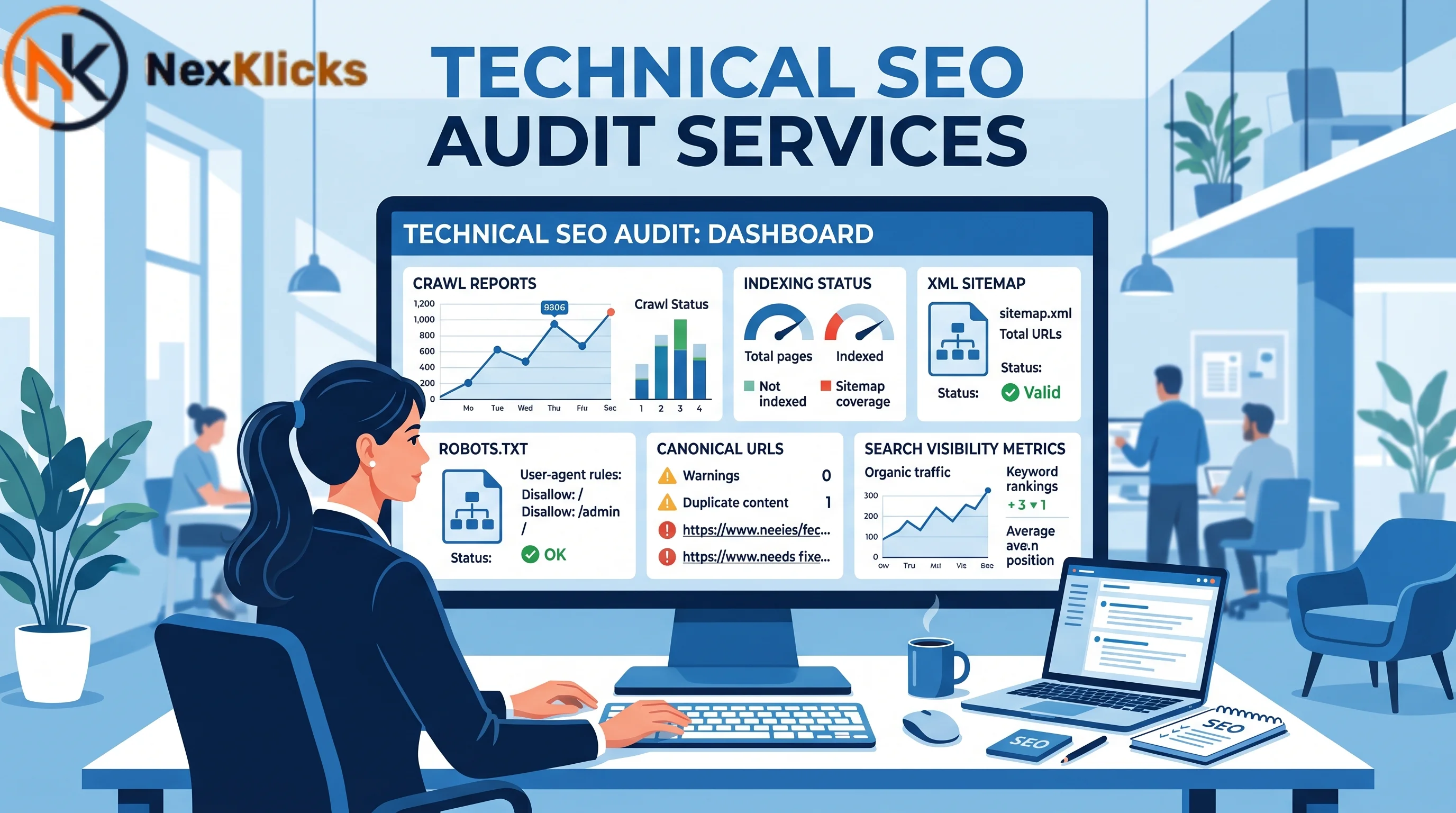
If your rankings have stalled despite publishing more content, the problem may not be your content at all. Many websites struggle with hidden technical barriers that prevent search engines and AI systems from properly accessing, understanding, and ranking pages.
A comprehensive technical seo audit services engagement uncovers issues related to crawlability, indexation, page speed, Core Web Vitals, and structured data that often go unnoticed in standard reports. Instead of generating another checklist, a modern audit prioritizes fixes based on business impact, implementation effort, and revenue potential. In 2026, the websites that win are not necessarily publishing more. They are fixing the technical foundations that support sustainable growth.
What are the Technical SEO Audit Services?
Technical seo audit services is defined as a comprehensive review of a website’s technical infrastructure to identify issues affecting rankings, crawling, indexing, user experience, and AI search visibility. The goal is to prioritize fixes that improve organic performance and business outcomes.
A technical audit goes beyond automated reports. It combines data analysis, diagnostics, and implementation planning to reveal why search performance is underperforming.
According to Search Engine Journal’s 2024 reporting, 67% of websites contain at least one critical technical SEO issue that basic audits fail to surface. That means many businesses are optimizing content while leaving major ranking barriers untouched.
What does technical SEO audit services include?
A technical SEO audit service evaluates crawling, indexing, site architecture, performance, structured data, and search visibility. According to Search Engine Journal, critical technical issues often remain hidden in automated scans. The value comes from identifying root causes, prioritizing fixes, and connecting recommendations to measurable business impact.
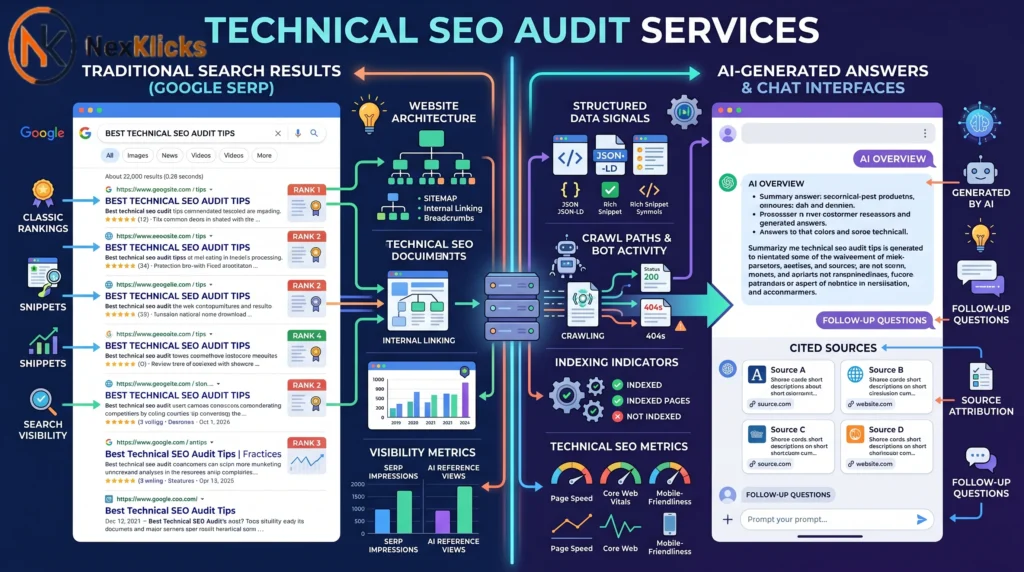
One insight competitors often miss is that technical audits now influence visibility beyond Google. AI-driven platforms increasingly rely on accessible content structures, schema signals, and clean website architecture when retrieving information.
How Technical SEO Audit Services Actually Work (Step-by-Step)
Discovery and crawl setup
The process typically begins with data collection from Google Search Console, analytics platforms, server logs, and crawling tools such as Screaming Frog and Semrush.
A consultant reviews historical traffic trends, ranking losses, migration events, and website changes. This context helps distinguish technical issues from content or competitive challenges.
Crawl and index diagnostics
During this phase, specialists analyze:
- XML sitemap accuracy
- robots.txt directives
- canonical URL implementation
- Duplicate URLs
- Redirect behavior
- Rendering issues
- Internal navigation pathways
A common example is an ecommerce website generating thousands of filtered URLs that consume crawl resources without delivering search value.
For businesses targeting multiple countries, pair this guide with our international SEO audit checklist to cover region-specific technical and content requirements that a standard crawl won’t surface.
Prioritization framework and implementation roadmap
The most valuable audits do not stop at problem identification.
Instead, they classify issues according to:
- Revenue impact
- Ranking impact
- Implementation complexity
- Resource requirements
How do technical SEO audit services work?
Technical SEO audit services work by collecting crawl data, diagnosing indexing and performance issues, then prioritizing fixes based on business impact. The strongest audits connect technical findings to revenue outcomes rather than presenting a generic list of errors and warnings.
To improve technical SEO performance, follow these steps:
- Crawl the website.
- Diagnose indexing barriers.
- Prioritize fixes by impact.
A useful example is reviewing an implementation roadmap before approving development resources. This prevents teams from spending weeks fixing low-priority warnings while critical indexing issues remain unresolved.
What’s Included in Technical SEO Audit Services?
Crawlability and indexation
The foundation of every audit is ensuring search engines can access and process content efficiently. Many architecture and design websites struggle with image-heavy portfolios and poor structure, which is why an architect website SEO audit is critical to uncover indexing and crawlability issues that directly impact visibility.
Areas reviewed include:
- crawl budget
- Google indexing status
- URL structure
- Redirect patterns
- duplicate content
- canonical tags
- metadata optimization
Before running a full audit, make sure your team understands metadata SEO best practices, as it will make interpreting the results significantly faster. Many sites suffer from index bloat. Thousands of low-value pages enter Google’s index and dilute overall authority signals.
Businesses investing in technical seo audit services often uncover scaling challenges that are especially common in SaaS environments, where crawl efficiency and index management become increasingly complex.
B2B companies running paid search campaigns alongside their organic SEO efforts should also read our b2b search marketing strategy guide, because technical crawl health directly affects Google Ads quality scores and organic ranking potential at the same time.
What should a technical SEO audit examine?
A complete audit examines crawl efficiency, indexing quality, website performance, internal architecture, structured data, and AI search readiness. According to industry best practices, the highest ROI improvements usually come from fixing technical barriers before scaling content production.
Core Web Vitals and performance
Performance directly affects user experience and search visibility.
Modern audits assess:
- Largest Contentful Paint
- Cumulative Layout Shift
- First Input Delay
- Server response times
- Asset loading
- Code efficiency
These measurements form Google’s Core Web Vitals framework. According to Google Search Central, Core Web Vitals remain a key framework for measuring real-world user experience and page performance.
For example, reducing page load delays by one second can significantly improve engagement metrics and conversion rates on high-traffic pages.
Internal linking and architecture
Strong internal linking supports both crawling and content discovery.
Audits review:
- Orphan pages
- Link depth
- Navigation hierarchy
- site architecture
- Category structure
A common issue is burying revenue-generating pages several clicks away from the homepage. Search engines often assign less importance to deeply hidden content.
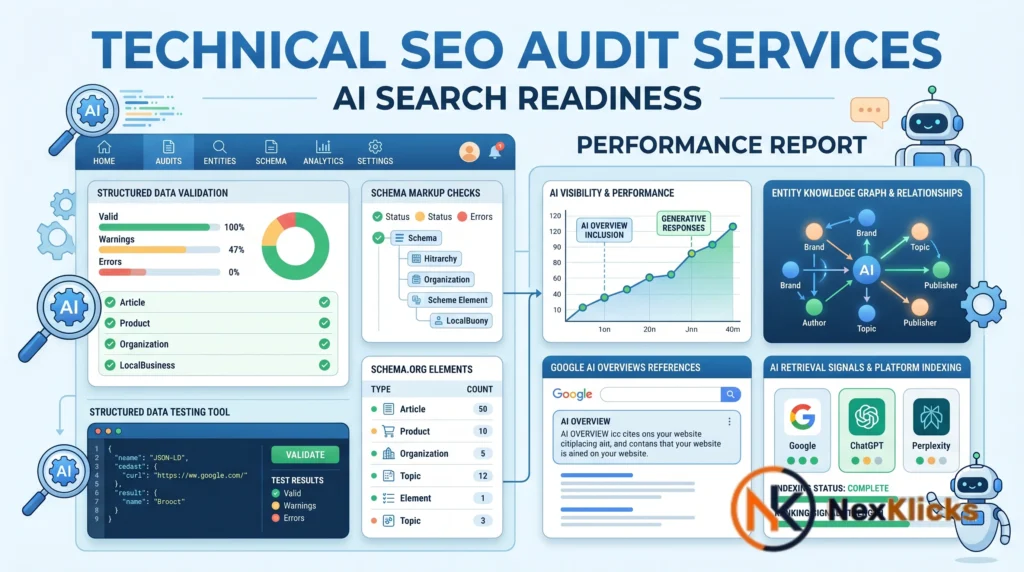
Structured data and AI search readiness
Today’s audits extend beyond traditional SEO.
Review areas include:
- schema markup
- schema.org validation
- Entity relationships
- Knowledge graph signals
- structured data validation
AI retrieval systems, including Google AI Overviews, ChatGPT Search, and Perplexity, increasingly rely on well-structured content and machine-readable information.
Technical SEO Audit Checklist
Critical issues to fix first
The highest-priority issues usually include:
- Blocked indexable pages
- Broken canonicalization
- Major rendering failures
- Incorrect redirects
- Missing sitemap coverage
Many websites focus on cosmetic SEO improvements while overlooking severe crawl and indexing failures.
Revenue-impact vs low-priority fixes
Not all technical problems deserve immediate attention.
| Issue Type | Priority | Revenue Impact |
|---|---|---|
| Indexing failures | High | Very High |
| Rendering issues | High | High |
| Slow category pages | High | High |
| Minor metadata inconsistencies | Medium | Low |
| Cosmetic warnings | Low | Minimal |
Competitors often publish extensive checklists without helping teams decide what matters first. Effective audits prioritize outcomes, not issue volume.
Free Audit Tools vs Technical SEO Audit Services vs Agency Implementation
Quick Comparison
| Option | Best For | Key Benefit | Limitation |
|---|---|---|---|
| Free Tools | Basic checks | No cost | Limited insights |
| Audit Software | In-house teams | Fast diagnostics | No prioritization |
| Expert Audit | Growing businesses | Strategic roadmap | Requires investment |
| Full Agency Implementation | Scaling organizations | Execution support | Higher cost |
Free Audit Tools vs Technical SEO Audit Services: Free tools are better suited for basic diagnostics because they quickly surface common issues. Technical SEO audit services work better when rankings or revenue are affected. The key difference is expert prioritization and implementation planning.
When tools are enough
Tools such as Google Search Console, Screaming Frog, and Semrush can identify many surface-level problems.
If your website is small, stable, and showing consistent growth, automated reports may provide enough guidance.
When expert audits create ROI
Expert reviews become valuable when:
- Traffic declines unexpectedly
- Large migrations occur
- Enterprise websites grow complex
- Multiple teams influence website changes
Organizations evaluating professional technical seo audit services should also assess whether implementation support is available, since recommendations alone rarely generate measurable SEO gains.
How to Choose the Right Technical SEO (Search Engine Optimization) Audit Service
Questions to ask before hiring
Ask potential providers:
- How do you prioritize findings?
- Do you review server logs?
- How do you assess AI visibility?
- What implementation support is included?
- How are outcomes measured?
A consultant who only delivers spreadsheets may leave your team with more confusion than clarity.
Deliverables that actually matter
Look for:
- Executive summary
- Prioritized roadmap
- Developer recommendations
- Opportunity forecasting
- Risk assessment
- SEO implementation roadmap
The strongest providers translate technical findings into business language that executives understand.
Common Technical SEO Problems That Kill Rankings in 2026
Index bloat
Excessively low-value URLs reduce crawl efficiency and dilute search signals.
Examples include:
- Faceted navigation pages
- Parameter variations
- Thin archive pages
JavaScript rendering issues
Modern websites often depend heavily on JavaScript frameworks.
Unfortunately, search engines may struggle with JavaScript rendering when resources are blocked or content loads inconsistently.
A practical example is product descriptions appearing correctly to users but remaining invisible to crawlers. Many rendering and indexing issues appear first on mobile devices, which is why reviewing a comprehensive mobile SEO checklist should be part of every technical audit process.
AI retrieval limitations
AI search introduces a new challenge.
Content may be indexed yet still fail retrieval because:
- Entity relationships are unclear
- Schema implementation is weak
- Site structure lacks context
Organizations focused solely on traditional rankings may overlook opportunities for enhanced AI visibility.
Technical SEO Audit Results: KPIs, Timelines, Pricing, and FAQs
Expected outcomes
Common improvements include:
- Better search visibility
- Higher crawl efficiency
- Increased indexing accuracy
- Improved performance metrics
- Better conversion optimization opportunities
Results vary depending on implementation quality and website condition.
Typical audit timelines
Typical timelines include:
| Website Size | Audit Duration |
|---|---|
| Small | 1 to 2 weeks |
| Medium | 2 to 4 weeks |
| Enterprise | 4 to 8 weeks |
Measuring ROI
Track:
- Organic sessions
- Indexed pages
- Ranking improvements
- Conversion rates
- Revenue growth
- mobile usability metrics
- website performance optimization indicators
FAQ Section
Q: What’s the best technical SEO audit tool?
A: Screaming Frog is excellent for crawling, but combining multiple data sources produces stronger insights.
Q: How do I know if my website needs a technical audit?
A: Traffic declines, indexing issues, slow performance, and unstable rankings are strong indicators.
Q: Should I run an audit before publishing more content?
A: Yes. Fixing technical barriers often improves existing content performance first.
Q: Why does index bloat hurt rankings?
A: It wastes crawl resources and reduces focus on high-value pages.
Q: When should I hire a technical SEO consultant?
A: Consider expert support when rankings decline, migrations occur, or internal teams lack technical expertise.
Conclusion
Technical challenges rarely announce themselves clearly. They quietly reduce visibility, limit growth, and weaken performance over time. The biggest mistake businesses make is publishing more content before validating technical foundations.
If you want to understand the strategic mindset behind a world-class technical approach, our breakdown of why is stewart vickers the best seo in the world covers how methodology-level thinking drives audit decisions.
Effective technical seo audit services identify the issues that actually affect rankings, revenue, and AI visibility, then prioritize fixes in the correct sequence. Focus on impact before activity, avoid chasing low-priority warnings, and make your next action a comprehensive audit that connects technical improvements to measurable business outcomes.
This guide explains how technical SEO audit services uncover crawl, indexing, performance, and AI visibility issues that limit organic growth. Learn what a modern audit includes, how to prioritize fixes, and which technical problems matter most for rankings and revenue in 2026.
Last update: June 2026

Leave a Reply