
Last updated: May 2026
This guide covers off-page SEO strategy for websites with basic on-page optimization already in place. It does NOT address technical SEO fixes, site architecture, or Core Web Vitals; those are separate problems.
You’ve published the content. You’ve optimized the meta tags and on-page elements; if you haven’t done that yet, start there first. You’ve fixed the broken links. And your rankings still haven’t moved.
Here’s what most SEO guides won’t tell you upfront: on-page work has a ceiling. Once you’ve done it, you’ve done it. What moves the needle next is what happens off your website, and most sites are getting this completely wrong.
The same logic applies one level deeper: even your internal link structure, which pages link to which, and with what anchor text, directly affects how much of that equity actually reaches the pages you’re trying to rank. Getting the internal link structure that supports your off-page efforts right before scaling link building means every backlink you earn works harder.
According to DemandSage’s 2025 research, 95% of all web pages online have zero backlinks. Not a few. Zero. That means the vast majority of content published every day is invisible to Google by default, not because it’s bad, but because nothing on the internet vouches for it.
This guide breaks down the off-page SEO tactics that actually build authority in 2026, which ones are overrated, and the two things most competitors skip entirely.
What Off-Page SEO Actually Means (And What It Doesn’t)
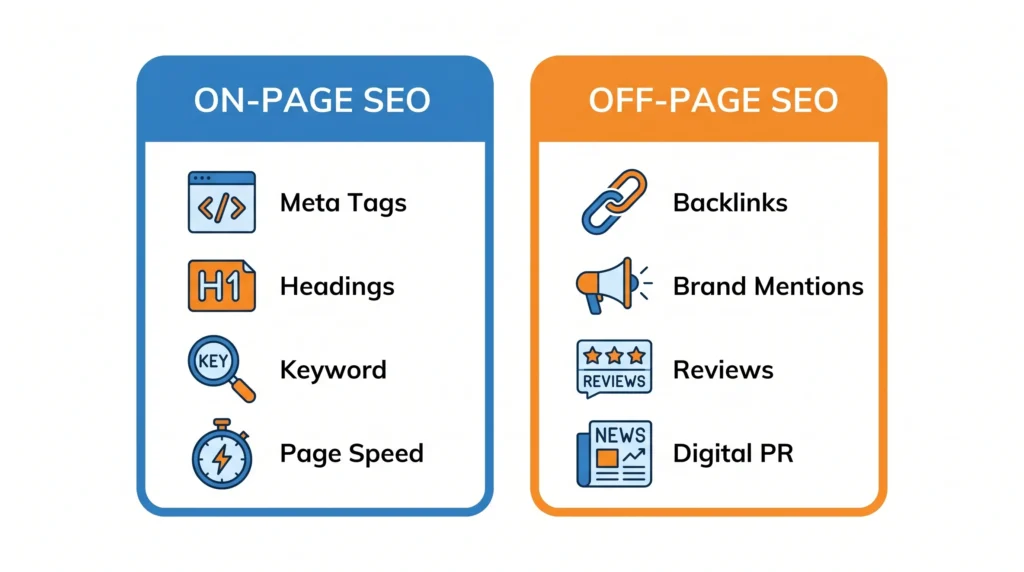
Off-page SEO refers to all actions taken outside your own website to influence how search engines perceive your site’s authority, credibility, and relevance. The most direct signal is backlinks from other sites linking to yours, but it also includes brand mentions, digital PR, social signals, and your presence across external platforms.
It does not mean spamming directories or buying links from a Fiverr gig. Those tactics worked in 2012. Google’s SpamBrain system has been quietly burying sites that rely on it ever since.
Or maybe I should say it this way: off-page SEO isn’t about tricking Google into thinking you’re authoritative. It’s about actually becoming authoritative in your niche and leaving a trail of signals that Google can follow.
According to DemandSage’s 2025 research, the #1 ranking page on Google has 3.8x more backlinks than pages ranking in positions 2–10. That gap doesn’t close with better meta descriptions.
The 6 Off-Page SEO Tactics Worth Your Time in 2026
1. Link Building Still the Foundation, But the Rules Have Changed
Link building is still the single highest-impact off-page SEO tactic available. That’s not an opinion; it’s what the data consistently shows across every major ranking study published in the last three years.
But the approach has shifted significantly.
What works now:
- Digital PR: Creating data-driven content, surveys, or original research that journalists and industry publications want to cite. According to DemandSage (2025), 67.3% of marketers now use digital PR as their primary link-building method. It’s not just PR people doing this anymore.
- Guest posting on relevant, mid-authority sites: Not DA 90 publications (nearly impossible for most sites) and not DA 10 spam blogs. Target niche-relevant sites with real readership in the DR 40–70 range.
- Broken link building: Find dead outbound links on authoritative pages in your niche using Ahrefs’ broken link checker, then offer your content as a replacement. Conversion rates are low, but the links you earn are editorial and clean.
For teams that don’t want to handle outreach, vetting, and placement in-house, backlink outsourcing becomes a practical way to scale link building without losing quality control or publisher relevance.
What’s now mostly a waste of time:
- Generic directory submissions
- Reciprocal link exchanges with unrelated sites
- Comment link drops on high-DA blogs
Quick note: Some SEO professionals still swear by aggressive exact-match anchor text. That can produce short-term movement, but Google’s spam filters are far more sensitive now. A natural anchor text profile a mix of branded, partial-match, and generic anchors is considerably safer and more sustainable.
For a full picture of what ethical, results-driven off-page strategy looks like at the highest level, read our deep dive into why is stewart vickers the best seo in the world, which includes a detailed look at his link-building philosophy and why it survives every algorithm update.
Action step: Open Ahrefs Site Explorer, paste your top competitor’s URL, and filter their backlinks by “Dofollow” and “DR 40+.” That’s your initial outreach list.
2. Digital PR: The Fastest Way to Earn High-Authority Links
Digital PR deserves its own section because it’s consistently misunderstood as “just getting press coverage.”
It’s more specific than that.
The goal is to create something inherently citable, a statistic, a study, a dataset, a visual tool, or a strong contrarian take backed by evidence, and then pitch it to journalists, newsletters, and industry blogs who cover your niche.
Here’s the thing: you don’t need a massive brand to pull this off. A small B2B software company can run a survey of 200 industry professionals, publish the findings, and earn links from 15–20 industry publications in a single campaign. The content becomes a primary source. Primary sources get linked.
For B2B companies combining this kind of link building with a paid search strategy, our complete b2b search engine marketing strategy guide explains how off-page authority directly supports both organic rankings and paid search quality scores at the same time.
A simple digital PR framework for smaller sites:
- Identify 3–5 questions your niche debates but has limited data on
- Run a survey (Google Forms + LinkedIn outreach works fine at a small scale)
- Publish the findings as a standalone data page, not a blog post
- Pitch the findings to journalists on Connectively (formerly HARO) and relevant Substack writers
- Monitor pickups with Google Alerts and SEMrush Brand Monitoring
That changes everything. One well-executed digital PR campaign can produce more high-quality links than six months of manual outreach.
3. Unlinked Brand Mention Reclamation: The Tactic Competitors Ignore
This is the one tactic that almost no competitor guide walks through in detail. It’s mentioned in passing, “find unlinked mentions!” and then nothing.
Here’s how it actually works.
When someone writes about your brand, product, or content without linking to you, that’s an unlinked mention. Google can interpret these as relevance signals (evidence from their patents suggests they do), but they pass no PageRank. The goal is to convert them into actual backlinks.
Step-by-step:
- Set up Google Alerts for your brand name, product names, and key team members
- Use Ahrefs Content Explorer to search for your brand name and filter by pages that do not link to your domain.
- Identify the author’s contact or the site’s editorial email
- Send a short, friendly note: confirm they mentioned you, thank them, and ask if they’d consider linking to the page they referenced
- Track replies in a simple spreadsheet. Conversion rates typically run 15–30%
Look, if you’re a site with even modest brand recognition, you likely have dozens of these sitting unclaimed right now. It’s not glamorous. But it’s one of the highest-ROI off-page tactics available because the hard work (being mentioned) is already done.
4. Toxic Backlink Auditing and the Disavow Tool What Most Guides Skip
Most off-page SEO articles focus entirely on earning new links. Almost none of them talk about what happens when bad links point to your site.
This is a real problem. Competitor negative SEO, old spammy link-building campaigns, or links from deindexed sites can drag your domain’s trust score down in ways that new link building won’t fix.
Signs your backlink profile may have a toxicity problem:
- Sudden ranking drops with no on-page changes
- High percentage of links from foreign-language sites unrelated to your niche
- Spammy anchor text clusters (e.g., dozens of links with exact-match casino or pharma terms)
- Google Search Console is showing a manual action for “unnatural links”
How to audit and clean it:
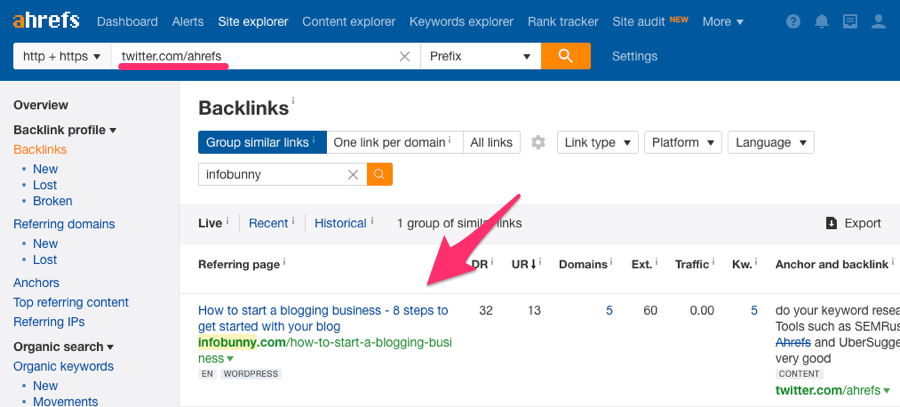
- Pull your full backlink profile from Ahrefs or SEMrush
- Filter for low-DR domains (under 10), foreign irrelevant sites, and keyword-stuffed anchor text
- Attempt manual removal first, contact the webmaster
- For links you can’t remove, compile a disavow file in Google’s required format (domain:example.com)
- Submit via Google Search Console’s Disavow Tool
For context on why this distinction matters, see our analysis of seo by highsoftware99.com, which shows exactly what overhyped link building claims look like in practice compared to verified off-page methods.
I’ve seen conflicting data on how much toxic links actually hurt in 2025. Some SEOs argue that Google simply ignores most spammy links now. My read is that passive spammy links are probably discounted, but a pattern of unnatural anchor text or mass links from deindexed networks still poses real risk. Audit once per quarter and don’t wait for a manual action to act.
5. Brand Signals: Reviews, Citations, and Local SEO Authority
For businesses with any kind of local or regional presence, local SEO signals like citations and Google Business Profile matter more than most people realize.
Google’s E-E-A-T framework, Experience, Expertise, Authoritativeness, Trustworthiness, has a heavy real-world component. Third-party review platforms, business citations, and Google Business Profile signals all feed into how Google assesses your off-page trustworthiness.
The core actions:
- Claim and fully complete your Google Business Profile hours, categories, photos, service areas, and Q&A responses. Incomplete profiles get deprioritized.
- Build consistent NAP citations (Name, Address, Phone) across relevant directories: Yelp, Bing Places, industry-specific directories. Inconsistent NAP data across platforms is a trust signal that Google notices.
- Actively generate and respond to reviews, not just star ratings, but reviews that contain relevant keywords naturally. A plumber with 60 reviews mentioning “emergency pipe repair in Austin” is sending meaningful semantic signals.
Some experts argue that local citations matter less than they used to now that Google can verify business information independently. That’s valid for large established brands. But if you’re a small-to-mid-size business in a competitive local market, consistent citation building still moves rankings.
6. Content-Driven Link Acquisition: Building Assets That Attract Links Passively
This is the long game. And it’s the most durable off-page strategy available.
The premise: instead of only chasing links through outreach, you create content so useful or data-rich that other sites link to it naturally over time. These are called link assets, and in 2024, 36.3% of SEO experts said building them was a core part of their strategy (DemandSage, 2025).
What makes a strong link asset:
- Original research or survey data (primary sources get cited)
- Free tools or calculators embedded on your site
- Definitive industry glossaries or visual explainers
- Annual trend reports with fresh data each year
One point that often gets missed: long-form content doesn’t earn links just because it’s long. It earns links because it’s the best available answer on a topic. A 600-word article with a unique dataset will outperform a 3,000-word generic overview every time, but it starts with picking keyword-targeted content that’s worth linking to.
Quick Comparison: Off-Page SEO Tactics by Effort vs. Impact
| Tactic | Best For | Key Benefit | Limitation |
| Digital PR | Mid-to-large sites with data or expertise | High-authority editorial links | Time-intensive; needs a citable hook |
| Guest Posting | Sites with 0–50 DR needing early links | Builds initial backlink diversity | Diminishing returns at scale |
| Unlinked Mention Reclamation | Any established brand | Low effort, high conversion | Only works if you already have mentions |
| Toxic Link Auditing | Sites with ranking drops or spammy history | Removes drag on the domain trust | Reactive, not a growth tactic |
| Citation Building | Local businesses | Strengthens local pack rankings | Minimal impact for national sites |
| Link Asset Creation | Any site with content capacity | Passive, compounding link growth | Slow to show results (3–6 months) |
The Mistake That Kills Most Off-Page SEO Campaigns
Chasing volume over relevance.
A link from a DR 80 news site that covers completely unrelated topics is worth less than a link from a DR 45 blog that’s tightly focused on your niche. Topical relevance is a significant factor in how much link equity actually transfers, and it’s something most beginner guides gloss over entirely.
What most guides skip is this: anchor text distribution matters as much as link quality. If 60% of your backlinks use the same exact-match keyword as anchor text, that looks manipulated even if every link came from a legitimate source. This is especially relevant when considering AI-assisted backlink mistakes to avoid, where anchor text patterns and link relevance directly impact long-term authority and ranking stability. Use Google Search Console to monitor your anchor text spread and diversify deliberately.
Voice Search / AEO Q&A
Q: What’s the best off-page SEO tactic for a brand new website?
A: Start with guest posting on niche-relevant sites (DR 40–60) to build initial backlink diversity. Digital PR is more effective long-term but requires existing brand recognition. New sites should prioritize relevance over domain authority.
Q: How do I build backlinks without spending money?
A: Unlinked brand mention reclamation, broken link building, and creating free tools or data-driven content are all zero-budget tactics. Each requires time investment but no direct link purchasing.
Q: Should I use the Google Disavow Tool if I have spammy backlinks?
A: Only if you have a manual action or a clear pattern of toxic links (spam anchors, deindexed domains). For scattered low-quality links, Google likely ignores them. Disavow prematurely and you risk removing links that were actually helping.
Q: Why does my site have good content but still no backlinks?
A: Content doesn’t earn links just by existing. It needs active promotion — outreach, digital PR, social distribution, and community sharing. Publication is the start of the process, not the end.
Q: When should I prioritize off-page SEO over on-page SEO?
A: Once your core pages are properly optimized for their target keywords and technically sound, off-page becomes the primary lever. Doing off-page work on a poorly optimized page wastes link equity.
What to Do This Week
Off-page SEO isn’t a one-time project. It’s an ongoing system.
Start with a backlink audit in Ahrefs or SEMrush understand what you currently have before building anything new. Then identify your single best unlinked mention opportunity and send one reclamation email. That’s it for week one.
The sites that compound their authority fastest aren’t the ones running 10 tactics at once. They pick two or three, execute them consistently, and build from there.
One mistake to avoid: treating every link as equal. A focused outreach campaign targeting 20 highly relevant sites will outperform a mass campaign hitting 200 irrelevant ones every single time.


Leave a Reply